Ask GRAI Anything
Your Real Estate Questions, Answered Instantly via Chat

Help us make GRAI even better by sharing your feature requests.
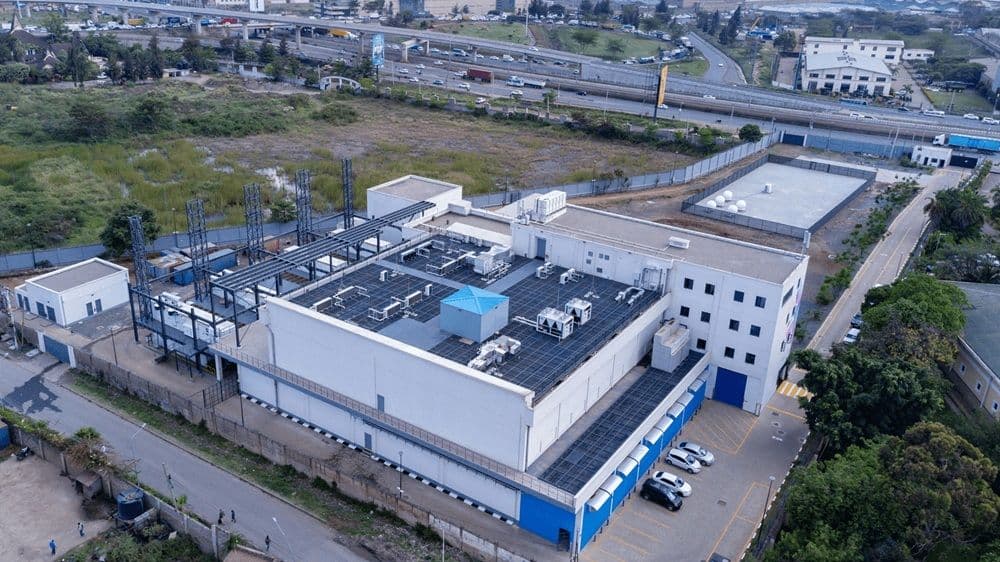
Across Africa in 2026, the highest value industrial land is being determined less by “cheap acres” and more by two bottlenecks: reliable power and scalable freight movement. Data centers cluster where grid capacity, interconnect timelines, and fiber are credible.
Logistics clusters where ports are expanding throughput and hinterland corridors can move goods with minimal friction. This creates a new playbook for investors: buy infrastructure readiness, not just location. The winners tend to be port linked logistics nodes and power rich industrial rings, while the losers buy “near the story” land that cannot actually operate at scale.
In mature markets, zoning tells you what can be built. In many African markets, infrastructure tells you what can be operated.
A parcel can be zoned industrial and still be functionally unusable for modern tenants if:
Power quality is inconsistent and backup costs are extreme
Grid connections take years
Fiber backhaul is weak
Port access looks close on a map but is slow in practice due to congestion and corridor bottlenecks
In 2026, this is why power availability and port throughput have become the two most important land value drivers for data center and logistics real estate.
The latest industry research frames Africa’s data center market as still developing, with an estimated 220 to 230 facilities across 38 countries, with capacity concentrated in a few hubs such as South Africa, Egypt, Kenya, and Nigeria. Another widely cited benchmark says Africa hosts less than 1% of global data center capacity.
A separate analysis highlights that the combined installed capacity of Africa’s top five markets remains under 500MW, which is less than the capacity in France alone.
Investor takeaway
This is not a “one country” data center story. It is a hub story, where a small number of metros capture most institutional development first, and then secondary hubs follow.
For data centers, land is the easy part. Power is the business.
A data center site is only investable when it has a credible power path:
Grid reinforcement is planned and funded
Substation proximity is real, not theoretical
Interconnect timelines are realistic
Backup strategy is costed, including fuel logistics, storage, and redundancy
This is why the market increasingly prices “powered land” at a premium, even when nearby unpowered land is cheap.
Africa added about 4.5GW of new solar PV capacity in 2025, a record annual increase, and roughly 54% higher than the previous year. That matters for industrial real estate because solar plus storage can accelerate power solutions for some sites, but it does not solve transmission bottlenecks everywhere.
Investor takeaway
Solar growth expands the set of possible sites, but the winning locations are still those with both generation potential and grid and interconnect credibility.
Logistics is the physical cloud. Ports are its backbone.
In 2026, port throughput growth is one of the cleanest “real demand” signals for logistics land.
Two datapoints illustrate how demand concentrates around specific gateways:
Tanger Med’s container terminals handled 11,106,164 TEUs in 2025, up 8.4% from 2024
The Port of Mombasa handled 2.11 million TEUs in 2025, up 5.5% from 2024
When a port grows, value rarely stays inside the port fence. It expands into:
Container yards and logistics parks
Last mile distribution rings
Trucking corridors and staging areas
Light industrial supplier zones
Bonded warehousing and customs adjacent property
Investor takeaway
Port led logistics is a throughput trade. If TEU and cargo volumes are rising and corridor friction is being reduced, industrial land values and rents tend to reprice in a durable way.
Stress test Africa industrial land deals with GRAI: https://internationalreal.estate/chat
This is not a prediction. It is a practical map of where the infrastructure logic is strongest.
Morocco is a clear example of how a high throughput port can anchor logistics and industrial demand. Tanger Med’s TEU scale and continued expansion supports a broader logistics ecosystem around the port and into industrial zones that serve export manufacturing.
Kenya’s Port of Mombasa throughput growth and broader cargo increases reinforce the importance of the Mombasa to Nairobi corridor and inland logistics. When throughput rises, warehousing and distribution often intensify in corridor nodes, not just at the port.
Large population and enterprise demand can support data center growth, but site feasibility depends heavily on power strategy. In markets where grid reliability is uneven, the data center map becomes even more hub concentrated.
South Africa remains one of the most mature data center hubs on the continent, benefiting from earlier hyperscaler attention, deeper enterprise demand, and larger existing capacity. The investor lens here is often less about “first data center” and more about submarket positioning, power resilience, and fiber routes.
Compare Africa logistics and data center corridors with GRAI: https://internationalreal.estate/chat
Distance is not access. The winner parcels are those with:
Reliable road connectivity
Predictable clearance and customs routes
Low congestion exposure
Real trucking and staging capability
If you cannot describe the power strategy, you do not own a future site, you own a waiting room.
Modern logistics tenants care about:
Clear height, floor loading, yard depth
Access to labor
Security and uptime
Reliable utilities and data
Data center tenants care about:
Power redundancy
Cooling feasibility
Security posture
Fiber diversity
Regulatory and permitting certainty
A site that fails these requirements can look cheap and still be unleaseable.
In infrastructure constrained markets, operating costs can be the difference between a great investment and cash drag:
Security
Backup power and fuel logistics
Maintenance and spare parts availability
Insurance and business continuity requirements
Use this to pressure test any site before you commit capital.
Grid reliability profile in that node
Substation proximity and expansion plan
Interconnect timeline and certainty
Backup strategy costed and operationally feasible
Solar plus storage feasibility as a hedge, if relevant
TEU and cargo trends for the gateway port
Clearance time and customs friction
Road and rail corridor bottlenecks
Trucking ecosystem and last mile constraints
Proximity to inland depots and consumption centers
Fiber routes and carrier diversity
Proximity to cable landing stations and backhaul
Latency to enterprise demand nodes
Regulatory requirements for data localization, where applicable
Who is the buyer or tenant pool, and how deep is it
Comparable transactions and leasing velocity
Vacancy and absorption risk under a slow demand scenario
Exit plan, including what discount clears in a 90 day sale
The most useful way to think about Africa in 2026 is simple.
Ports create throughput demand.
Power enables modern operations.
Where they overlap, land values can reprice rapidly.
Where they do not, investors can sit on cheap industrial land for years with limited liquidity.
This is exactly where the GRAI real estate AI platform becomes practical. It helps you underwrite constraints, compare corridors, and model scenarios without relying on one broker narrative.
“Rank African logistics and data center corridors by port throughput momentum, grid reliability, and investable industrial land availability, then explain the drivers.”
“For a site near Tanger Med or Mombasa, build a due diligence checklist covering power path, corridor access, permitting, and tenant requirements.”
“Model an industrial land investment under 3 cases, fast infrastructure delivery, slow delivery, delayed delivery, show holding cost drag and required exit discount.”
“Identify workforce housing opportunity zones around major ports and data center hubs, then estimate rental demand durability and the biggest regulatory risks.”
Try it here: https://internationalreal.estate/
Because modern logistics and data centers are infrastructure businesses. If freight movement is unreliable or power is unstable, tenants will not commit, and land stays cheap for a reason.
Industry research consistently points to concentration in a few hubs, commonly including South Africa, Egypt, Kenya, and Nigeria, with the top five markets holding under 500MW combined installed capacity.
TEU growth is a direct demand signal for logistics real estate. Rising throughput usually expands demand for warehousing, distribution, container yards, and supplier industrial zones along the port to hinterland corridor.
It helps, but unevenly. Africa added about 4.5GW of solar PV in 2025, up 54% year on year, which improves the power outlook in some places. Grid reinforcement and interconnect timelines still decide which sites can operate at scale.
Buying based on proximity rather than corridor access. A site can be close to a port and still be slow, congested, and unattractive to tenants.
Assuming land is the bottleneck. Power, permits, fiber, and uptime economics are the bottlenecks.
Ask two questions first:
Can this site secure reliable power at the required scale within a realistic timeline.
Can this site move goods or data reliably with low friction.
If either answer is unclear, treat the deal as high risk until proven otherwise.
In Africa’s 2026 industrial real estate market, land value is no longer driven by price alone. The real edge sits in locations where reliable power, strong port throughput, and efficient corridors come together. For investors, the smartest strategy is to back infrastructure ready sites that can actually support modern logistics and data center demand at scale.


